
I benefit from reading my Bible with a set of pens that I use to mark and make notes. I make the marks and notes in my Bible itself, which I described in my first post on this topic. Reading my Bible this way helps me get more out of what I read and is helpful to refer to later.
Pens
The pens I use work very well for marking or writing on the pages of a Bible. They are Sakura Micron archival pens and can be ordered on the Internet for a pretty reasonable price.
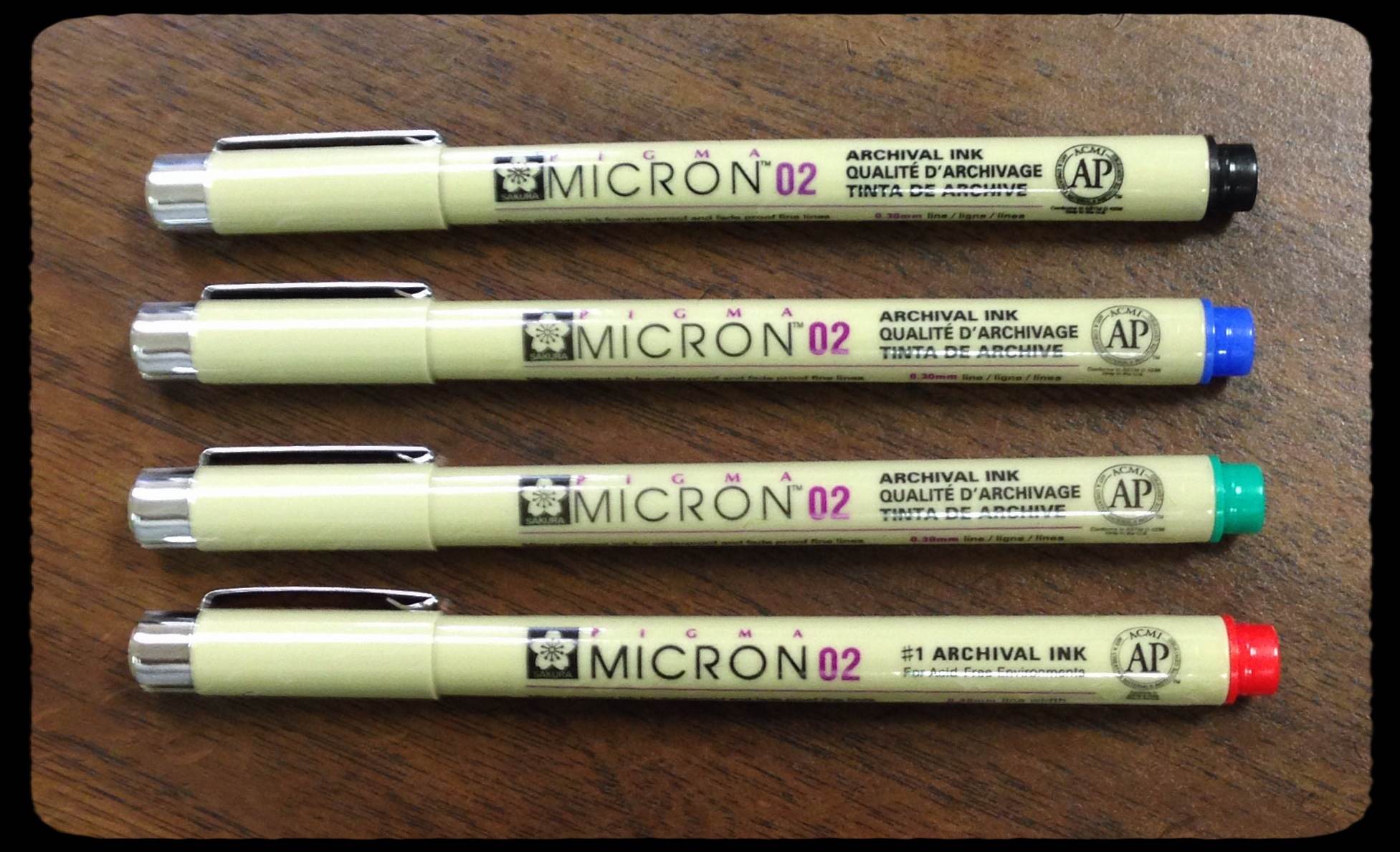
These are available in a gradient of nib sizes. I use 02, which makes a .3 millimeter mark. With this size it is possible to write notes in fairly small spaces around the text. The fine mark it produces also keeps my notes from visually overpowering the text of the scripture itself. The archival ink does not bleed through the paper and does not smear. It is fade-resistant and waterproof. I use four different colors – black, blue, green, and red.
What I mark
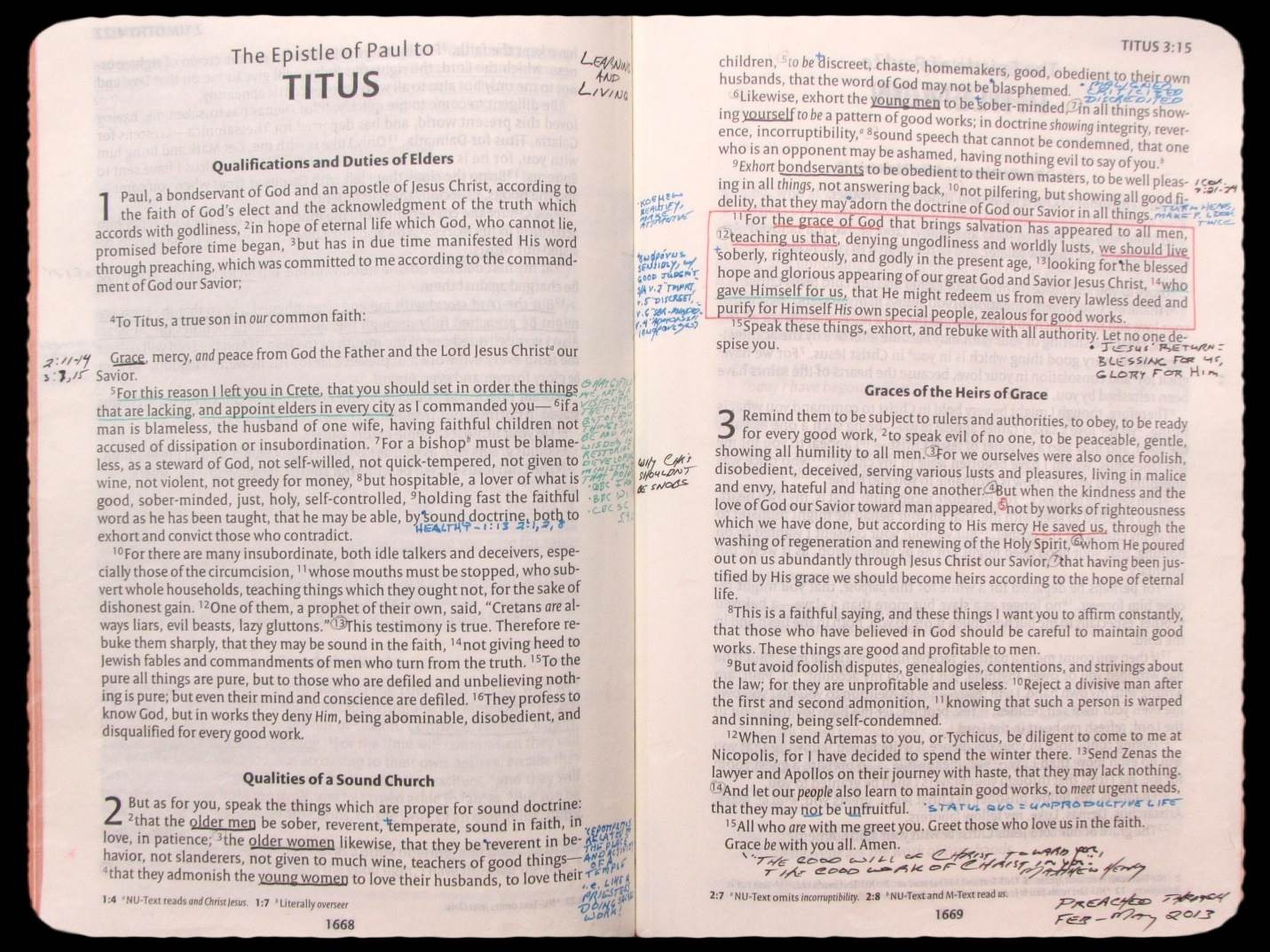
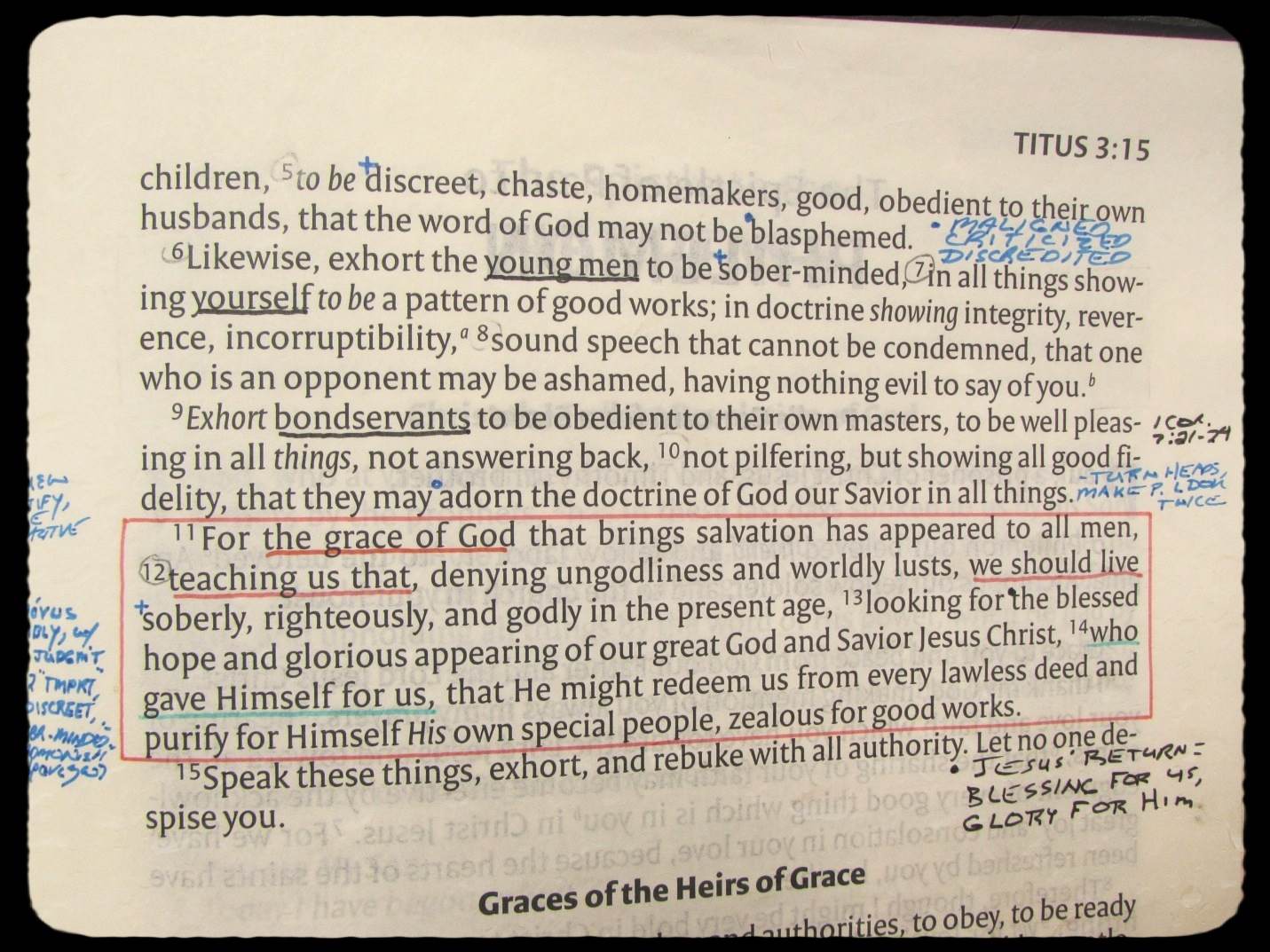
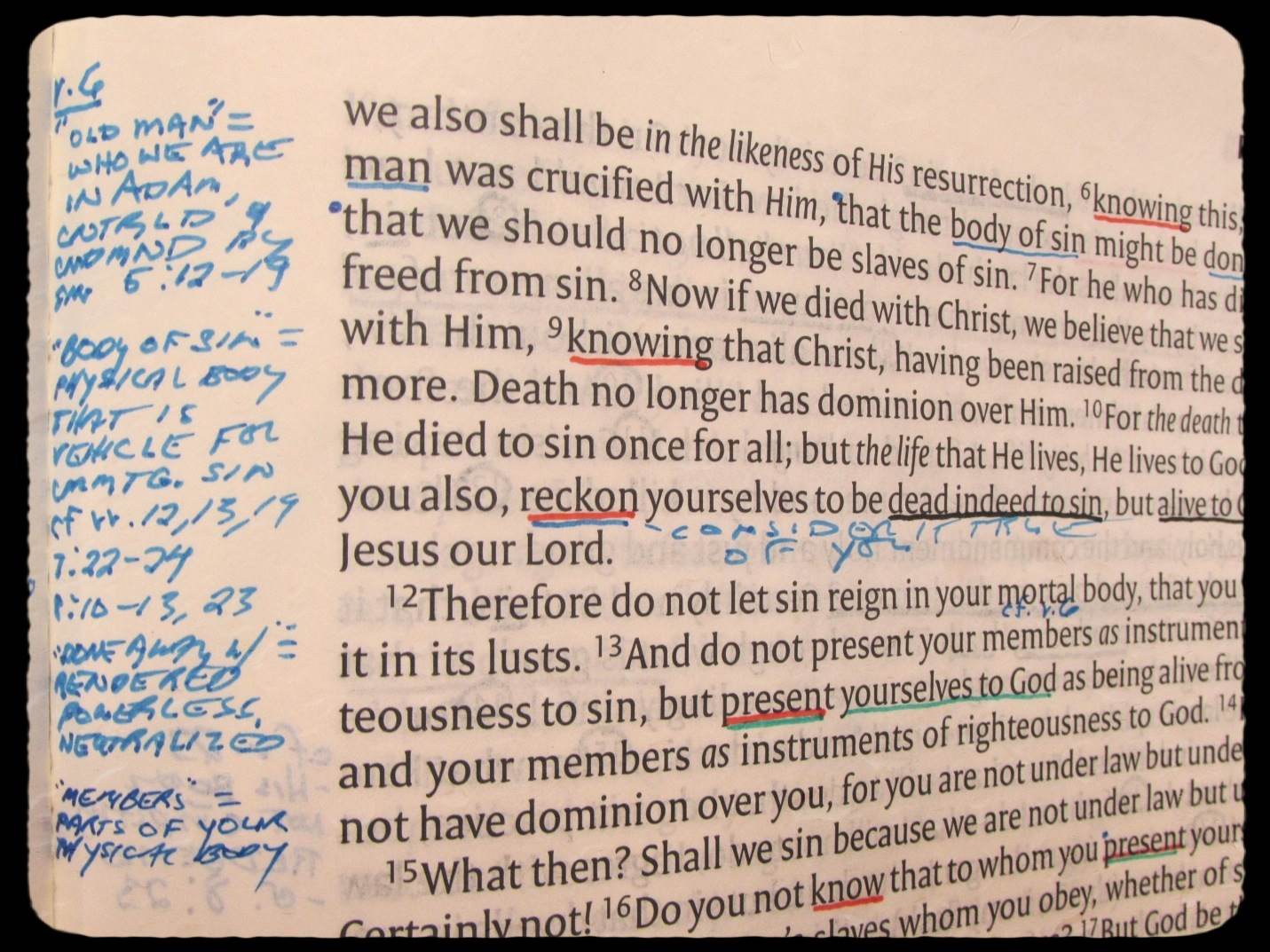
As I read the Bible, I mark or make notes related to four areas: key ideas, significant ideas, personal growth, and meaning. Here is a pic of what this looks like on a page of my Bible.

Key ideas are big, very important statements or truths within a book or passage. Of course, every statement in Scripture is important, but some contain the main idea that the rest of the passage or book is related to. I underline these in red. You can see on the sample that I have marked “the fruit of the Spirit” with a double red line. This idea is the focal point of the passage leading up to it. You can also see that I’ve underlined “God forbid that I should boast except in the cross of our Lord Jesus Christ” in red. This statement is Paul’s personal conclusion to the issue of prideful legalism that he has been addressing in Galatians 6.
Significant ideas are main thoughts grammatically or that just stand out to me. I underline these in black. I also use black to make marginal notes of significant cross references or related ideas. You can see a few of these notes and underlines in the sample. Black is my “go to” color for anything I just want to highlight or note.
I use a green pen to underline text or make notes that help me in my personal growth. Notice in the pic Galatians 6:8 where I underlined “he who.” I also placed a green dot by it, indicating there’s a corresponding note in the margin. Then in the right margin I wrote “I choose.” That was my personal application of the words “he who,” indicating that each of us chooses whether to sow to the flesh or to the Spirit. Notice also in verse 9, where I underlined “grow weary” and “lose heart.” As I read this, I recognized that I have experienced these feelings numerous times in my life, so I wrote in the margin, “I am susceptible to.” This is a good example of how I read the Bible interactively, using my pens to mark and note truths that help me in personal growth. You can also see at the bottom of the page where I wrote out practical ways to “sow to the Spirit.” I can’t remember if I heard or read these somewhere or came up with them myself, but they were helpful, and I had room at the bottom of the page, so wrote them in.
I write notes that explain meaning of a word or phrase using a blue pen. You’ll see blue dots by words in verses 9 and 12. In the margin on the right, I have written Greek words, meanings, and uses. In verses 12 and 13 I have also used an asterisk in the text with a note in the margin where I give the significance of the purpose statements in the text – “motivations of legalists.” These marks and notes all relate to word definitions, grammatical connections, and interpretive ideas that help me understand what the text means.
Some people have an aversion to marking in their Bibles. Obviously I do not. I don’t think the physical pages and printed words are to be revered or worshiped, though certainly respected. God speaks to us through His Word. I want to interact with it in a meaningful, personal way. This system has helped me do that.

 Dean H. Taylor