I love it.

I love natural beauty.  What I mean is the beauty found in nature.

Where I grew up in rural southeastern Ohio, our home was surrounded by woods with a creek (“crick”) running through it.  I spent endless hours in those woods, at that creek, my days filled with the sights, sounds, feel, and smell of nature.  And taste.  Yep, I liked to eat stuff I found in the woods – blackberries, wild anise, honeysuckle nectar, pawpaws (look it up!).    Another place we lived was a little house, literally in the middle of woods, surrounded by a large creek and three ponds.  I could walk 50 yards to a creek full of bass and panfish.  I regularly watched out our living room window as a great blue heron fished in the shallows of the ponds.  I went to sleep to the LOUD chorus of bullfrogs that lived right outside my bedroom window.

I suppose being exposed to the beauty of nature in my formative years developed an appreciation for it that has never gone away.  I still love it, and love every chance I get to be outdoors.

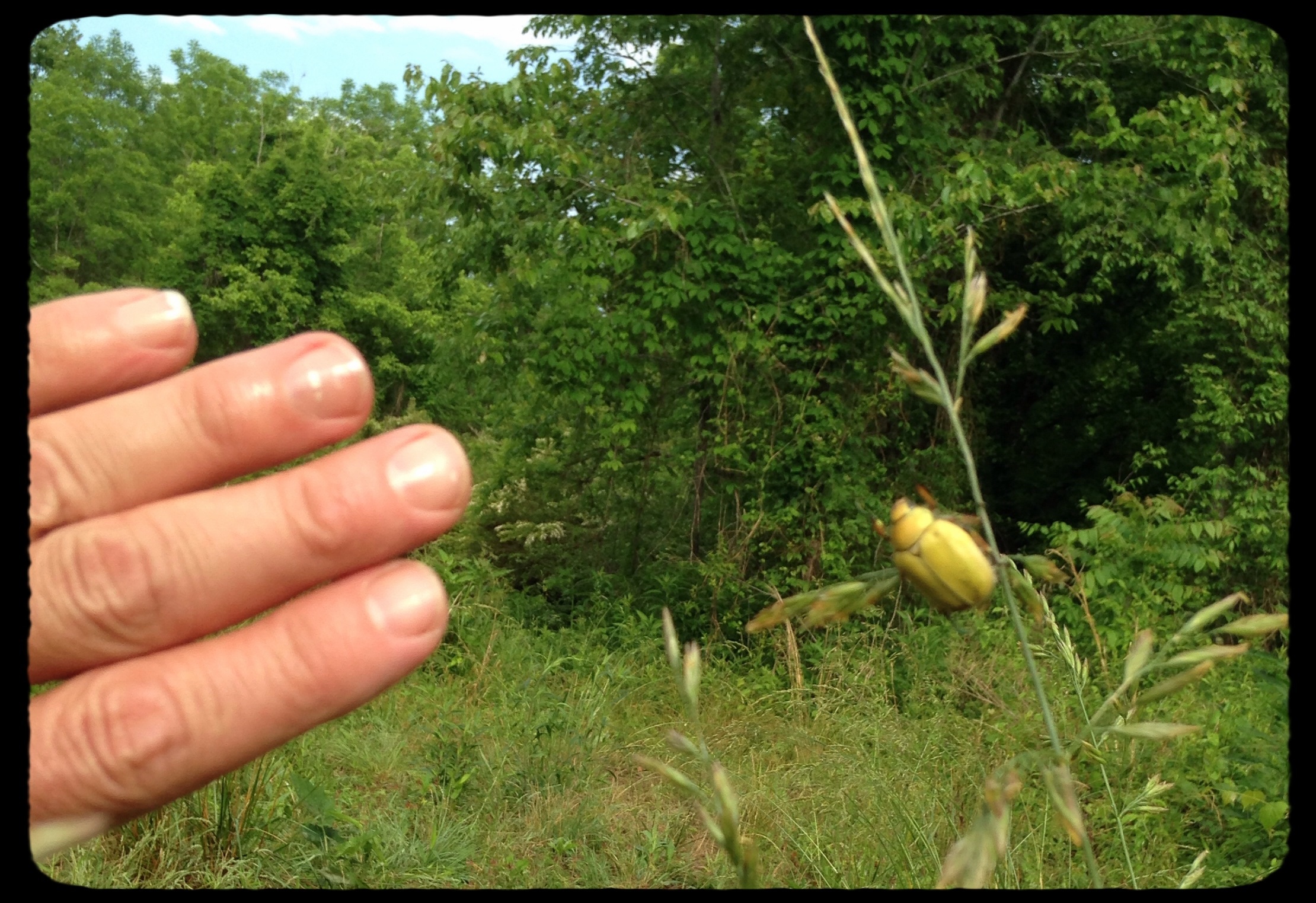
I love the creatures.  My mother, who lives with us, helps the Lord take care of the birds :). Her feeders draw them close, and they are so fun to watch.  Bugs fascinate me. The little boy in me has to stop and look at an interesting bug.  Here, check this out. Saw it while fishing a couple weeks ago. What in the world??? It’s as big as my thumb. So cool.  Right?
Image

Did somebody say fishing?  Of course I love the feel of a fish on the end of my line, and I sure love to eat freshly caught trout.  But honestly a lot of it is about the setting. I just love to be near, on, or in water.  I especially love the mountain streams and freestone rivers that trace through the northwest corner of South Carolina. The clear water, warm sun, slight breeze (or impending thunderstorm!), rock formations, wildlife, and of course the pink-striped rainbow trout, are almost intoxicating to me.  My mom (AKA Grandma Taylor) tells me there are ions in the air around oceans and rivers that are “good for you.”  I looked it up. Pretty sure she’s right.  That’s why I am refreshed and recharged there.

A stunning sunset will stop me in my tracks.  So will a cool-looking bug.  Or a lush bed of ferns, or a tiny  flower.

And in every case, my heart lifts heavenward.  I delight in the beauty, and I think of the Creator.  I worship Him.  And I often think of how good He is to not only make beauty, but make us with the capacity to appreciate it, to visually drink in the vista, to inhale the fragrance, to feel the sun, the breeze, the pelting rain.

A while back I heard a song that expresses this so well.  It has become a favorite.  May it become your heart’s cry as you enjoy and grow to love the beauty, outside, around us.

Authentic Worship

A few weeks ago, Thom Rainer published an article called What Worship Style Attracts the Millennials.  Some of my younger family members and friends emailed me or posted about it on Facebook, all of them saying, in essence:  “He nailed it.”

Rainer stated his view that Millennials are not seeking a particular “style” of worship (e.g. Contemporary vs. Traditional), but desire to participate in worship that includes three major elements:

  • Music that is rich in biblical and theological content
  • Authenticity
  • Quality produced by adequate preparation.

My heart definitely resonates with these elements when they are present in a worship service.  I’d like to dig into the element of authenticity for a bit.  I suppose that means different things to different people, but here are some of my observations about it.

Ranier says, “The Millennials desire authenticity in a worship service.  They can sense when congregants and worship leaders are going through the motions.  And they will reject such perfunctory attitudes altogether.”  So in Rainer’s explanation, the opposite of authenticity is “going through the motions” and “perfunctory attitudes.”  Perfunctory, in case you’re struggling with that one, is used to describe something that is done without energy or enthusiasm because of habit or because it is expected according to Merriam-Webster Online.  Some synonyms include mechanical, routine, and superficial.  So authentic worship is a true reflection of what is in the hearts of the worshipers and leaders.  It represents their genuine thoughts, beliefs, and feelings.  It is real.  It is not a performance, nor a program presented to an audience. The people who plan and lead the worship are not just filling slots with song selections.  They are leading the people to thoughtfully and purposefully engage with truth about God and reflect it back to Him in musical praise and to one another for mutual edification.  And the people in the congregation are not merely singing what the leader announces, but expressing what they really believe about God, uniting their hearts and raising their voices to praise Him.

I desire for the worship in our Lord’s Day Gatherings at Calvary to be authentic, not just because it’s what a demographic category of people want, but because God is worthy of it.  Here are some ways to make or keep worship authentic.  Some of them we are endeavoring to do now and others we can grow in and develop.

  • Spend significant time praying together as pastors and leaders in preparation for upcoming services.
  • Allow plenty of time for planning and discussion of elements of worship services.
  • Be intentional and purposeful in planning what goes into a service.  Select music and Scripture reading and prepare comments and prayer so that all aspects of the service guide the congregation to reflect on and respond to specific truths.
  • Avoid showy music, whether vocal or instrumental.
  • Don’t do what’s expected just because it’s expected.  For example, avoid singing the same three songs every Father’s Day, or only Christmas songs in December.  Sure, it may be appropriate to include some selections that are traditionally used in certain seasons, but thoughtfully include some that relate to familiar truths in fresh ways.
  • Try to be thoughtful and original with the “patter” that we use as pastors during the worship service.  We tend to say the exact same things when welcoming the congregation, recognizing visitors, announcing the offering, etc.  It’s hard to be original when you’re going over the same subject week after week, but it’s good to make an effort to engage people’s minds rather than numb them with repetition.
  • Don’t overformalize.  Be personal, transparent when appropriate, and expressive in verbal comments.  Use music that is accessible, not so complicated that some can’t sing it or understand it.
  • Do a Scripture study of the elements of corporate gatherings.  Teach and talk through why we do what we do in worship.  Here are some references to get started:  Ecclesiastes 5:1-3; 2 Timothy 2:15; 2 Timothy 4:2; 1 Corinthians 14; Ephesians 5:19; Colossians 3:16; 1 Corinthians 16:1-2.

Worship should be authentic regardless of whether it is attractive or not.  But if engaging the hearts of the next generation is a result too, that’s a good thing.

What do you think?  What makes worship authentic? What produces authentic worship?

The Batcave (My Study)

I have a separate, very private and quiet room where I do most of my study for preaching and teaching the Bible.  It’s located in the lower level of our Administration Building, away from the busyness of the church offices.  I spend most Tuesday-Friday mornings here, studying the Word and preparing messages and Bible studies.  I do some planning and audio recording here as well.  I’d like to give you a tour.

This is the entrance.  When I turned this room into my study, someone started calling it The Batcave, and it stuck.  My wife had this sign made and gave it to me for Christmas.

Image

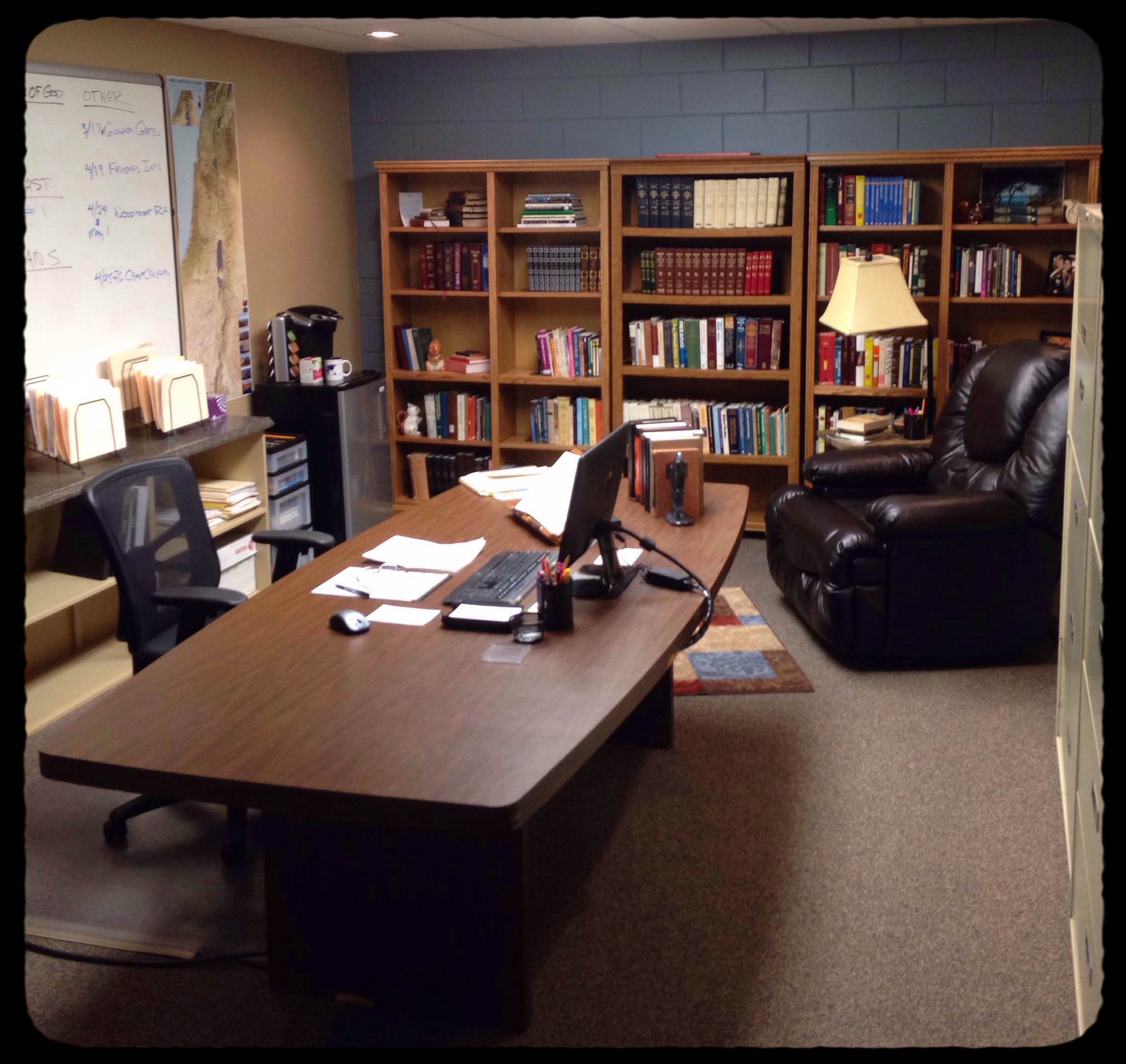
Here you can see most of the room, with my study desk in the center, and the bookshelves, filing cabinets, whiteboard, and reading corner.

Image

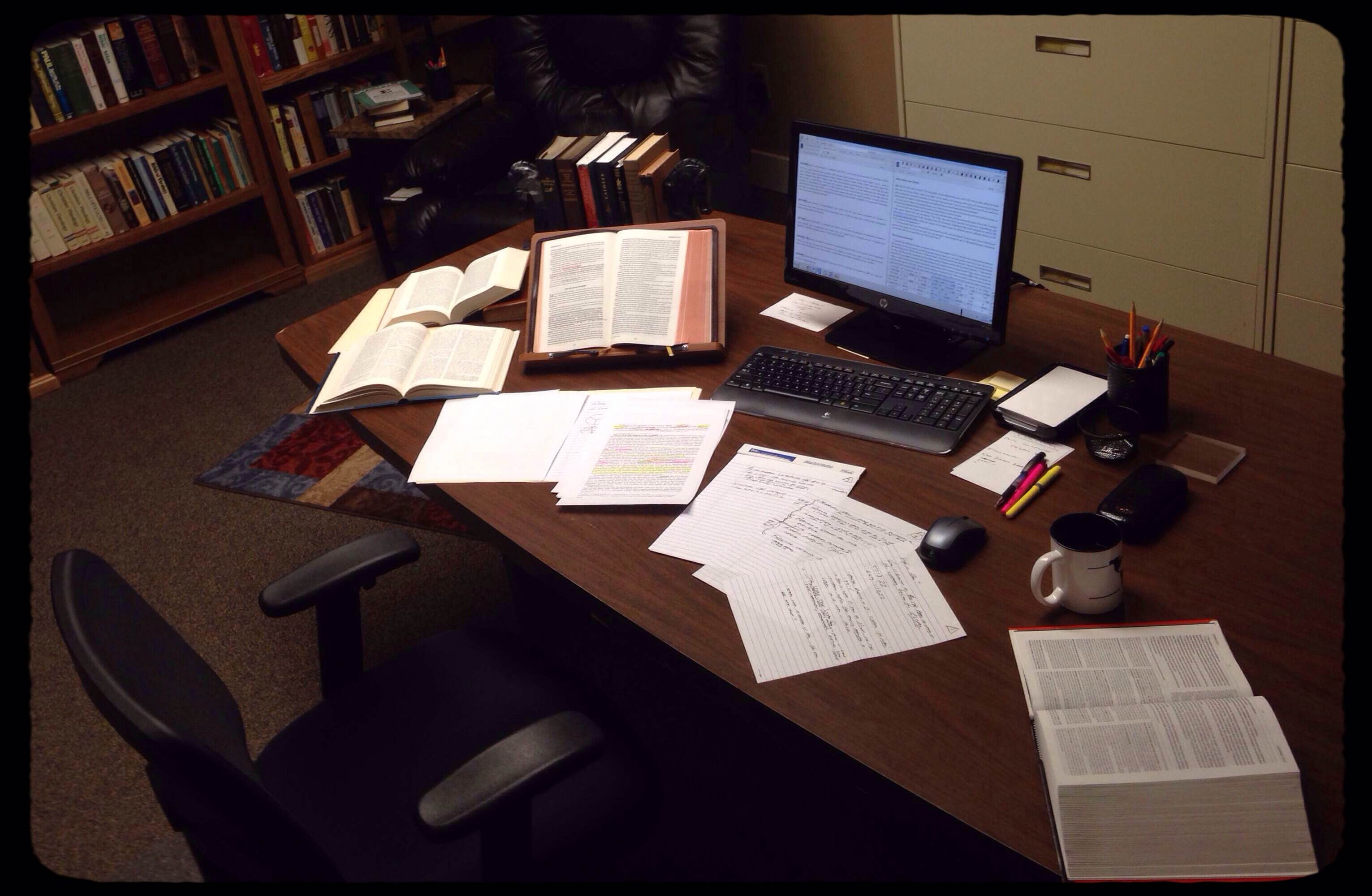
This is my study desk.  Here’s what it looks like on Friday morning.

photo1 (11)

It’s actually an old conference table that was brought to the church by teens on a Bigger and Better activity a few years ago.  It served as a game table for the youth group for a while, and now I use it.  It’s perfect for spreading out my study materials.  The window open on my computer desktop is Logos Bible study software, which contains my primary tools for exegeting the Word.  I keep a few hard copy books within arm’s reach.

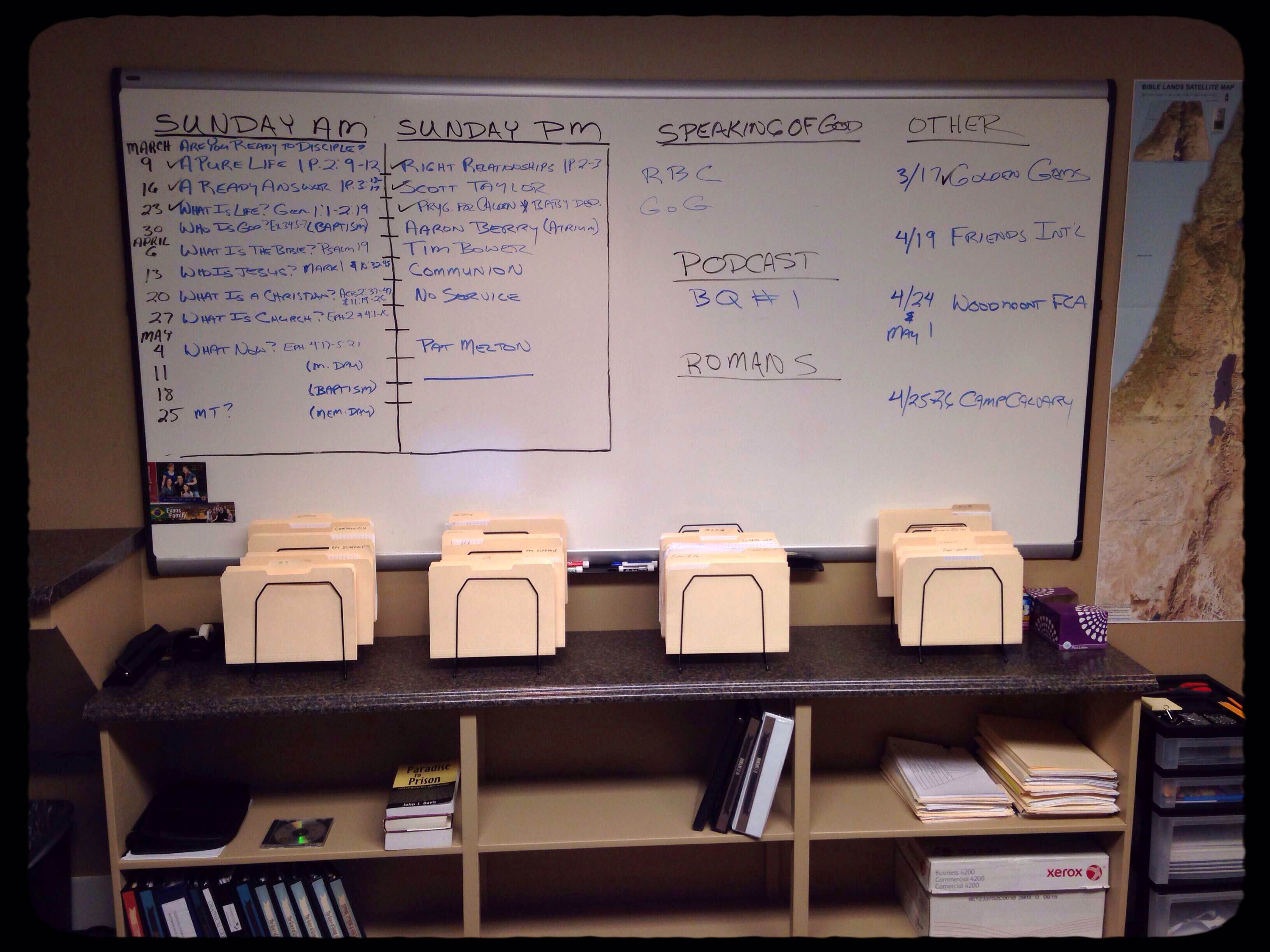
The area behind my desk is custom-built for visualizing and organizing my message preparation.  I put the schedule for upcoming messages on the whiteboard, and keep files, books, and notes related to those messages on the shelves underneath.

Image

I use this stand up area when I want to be on my feet instead of being sedentary all day.  There’s an additional computer monitor I can use, and it’s also where I record audio, which I did when we had a radio broadcast and am about to begin using it to try podcasting.

photo1 (9)

On another wall is my “Vision and Plans” whiteboard.  I use this to keep ministry plans and goals in front of me, and sometimes for visionary brainstorming.

Image

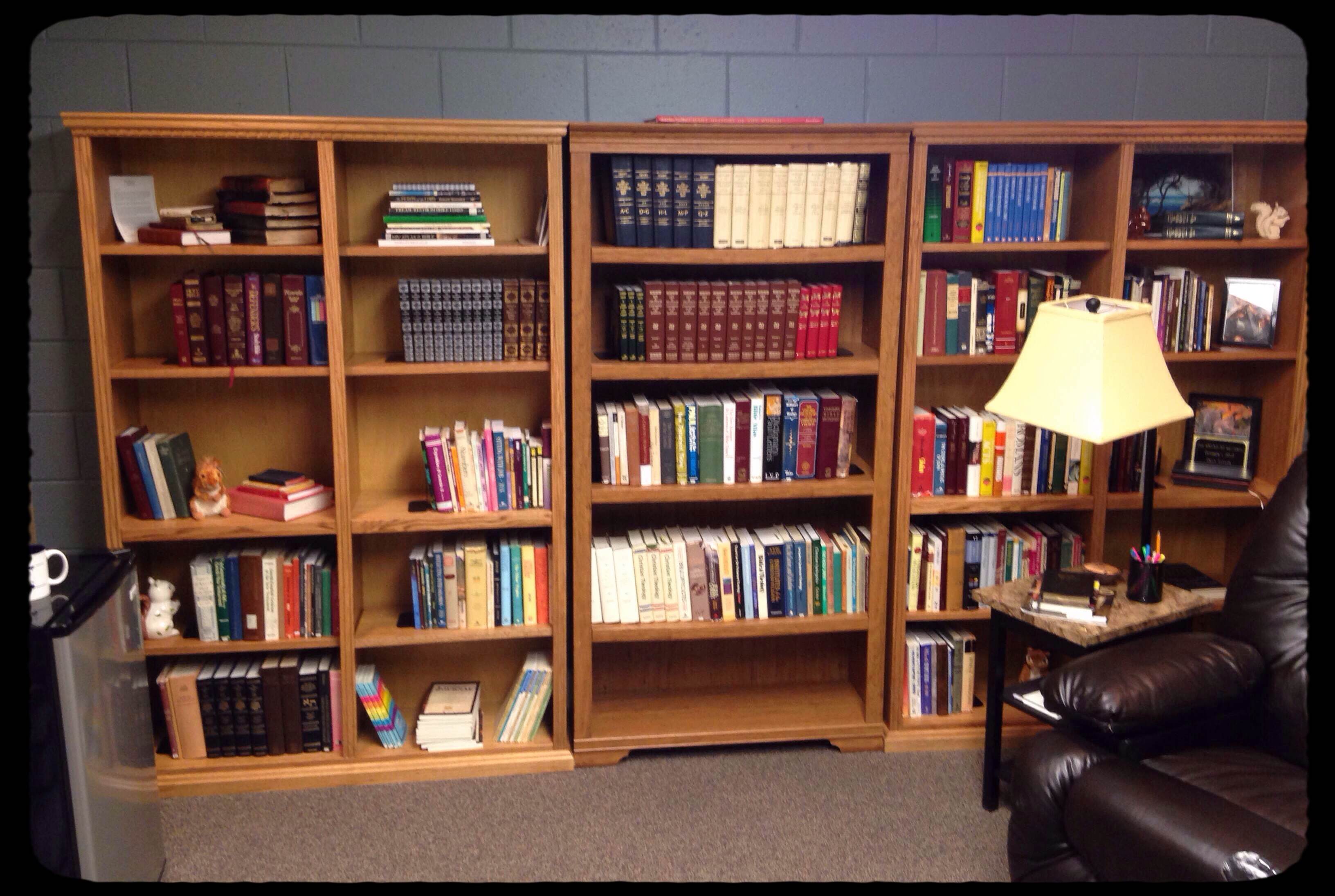
I have some books in my upstairs office, but most of the hard copy books I use for studying the Scriptures are on these shelves.  Many of my study resources are in electronic form.

Image

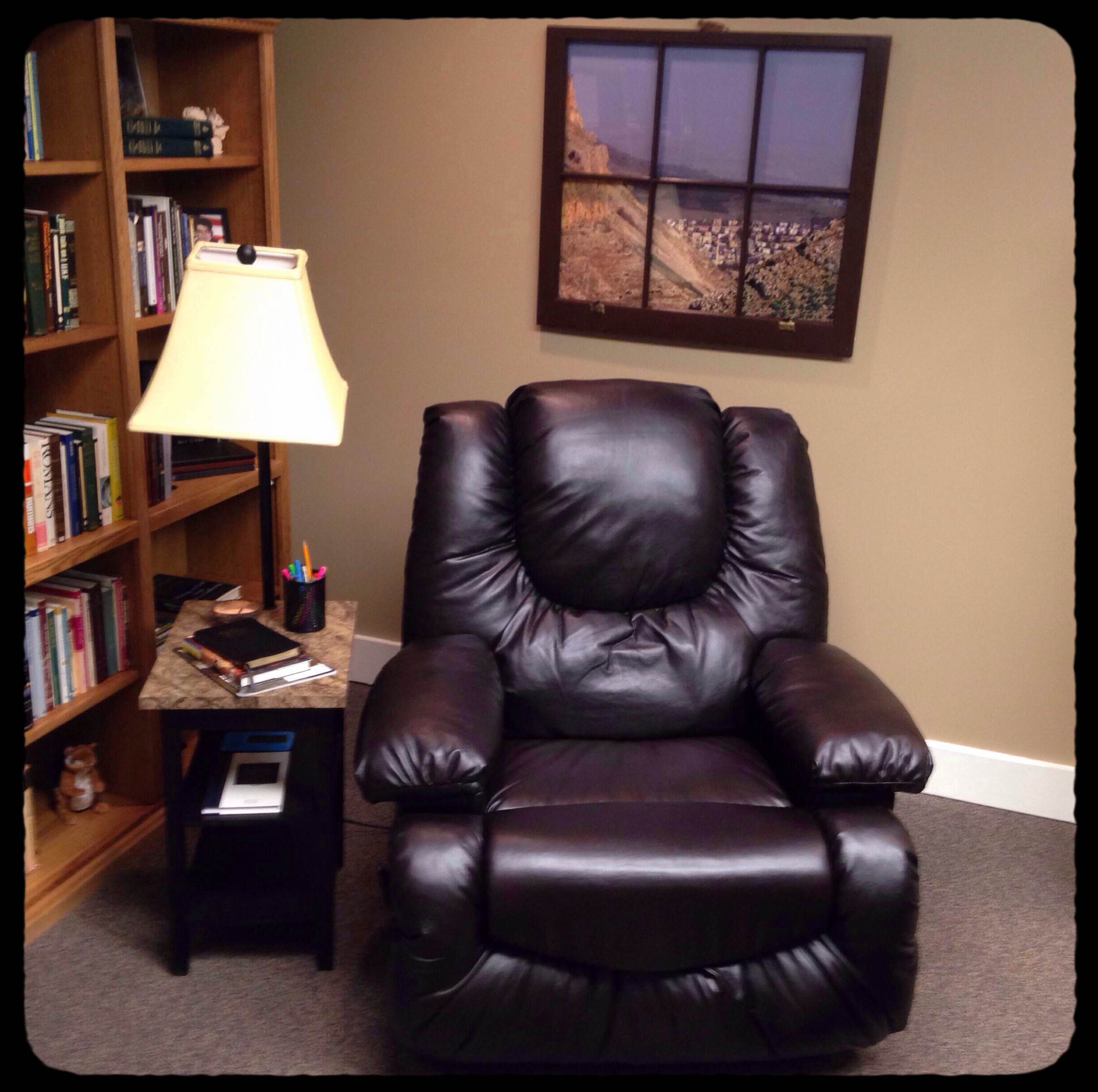
This reading and praying corner is almost too comfortable, especially since the chair is a recliner.  Who doesn’t need a power nap now and then?

Image

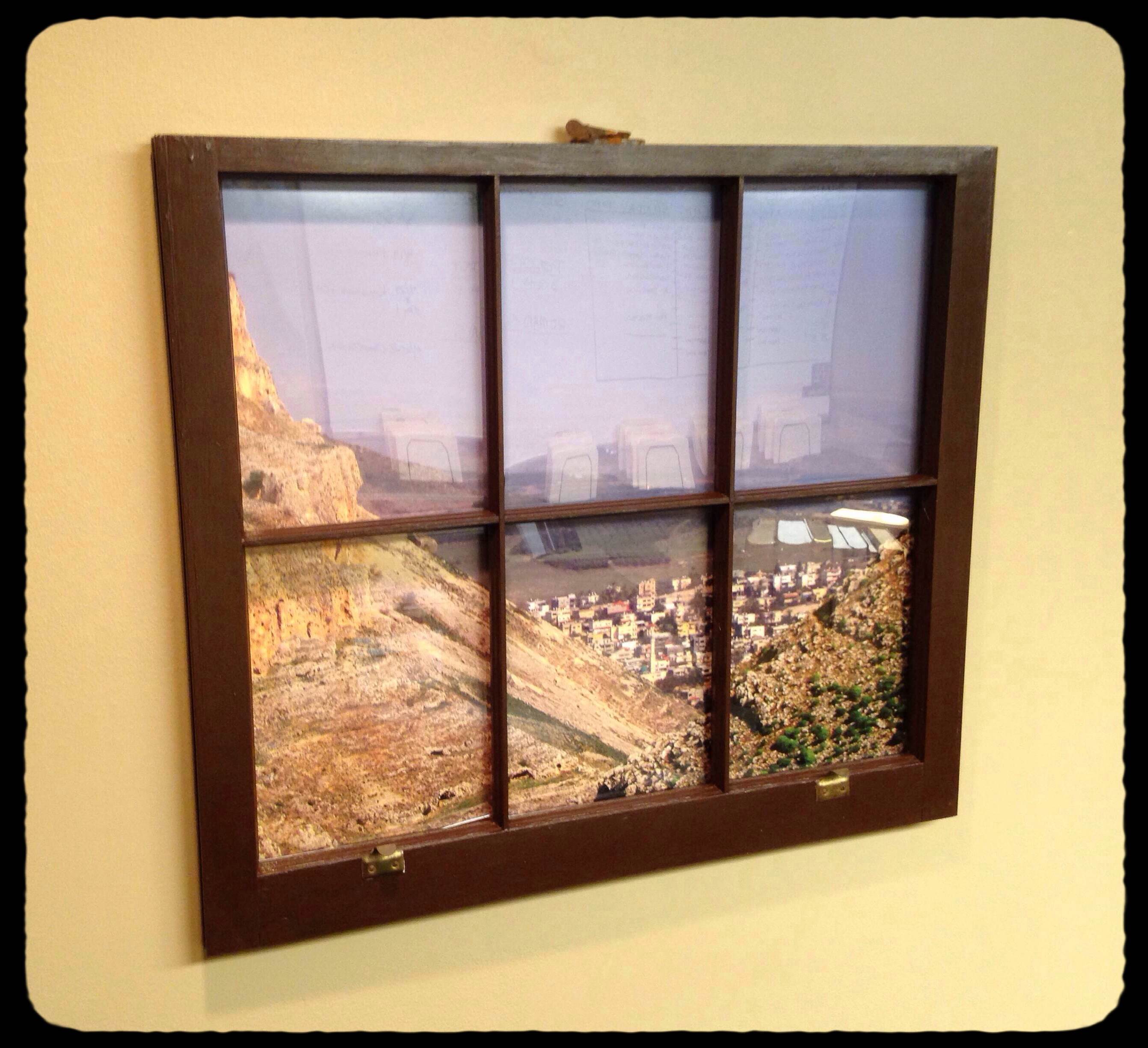
A few times I’ve joked that “The only thing my study is missing is a window.”  Well, our very thoughtful staff members gave me one!  For my birthday, they gave me this window with a “view.”  The picture is actually one that I took on our recent trip to Israel.  They even gave me more pictures so I can change them out when I want.  Perfect!!!

Image

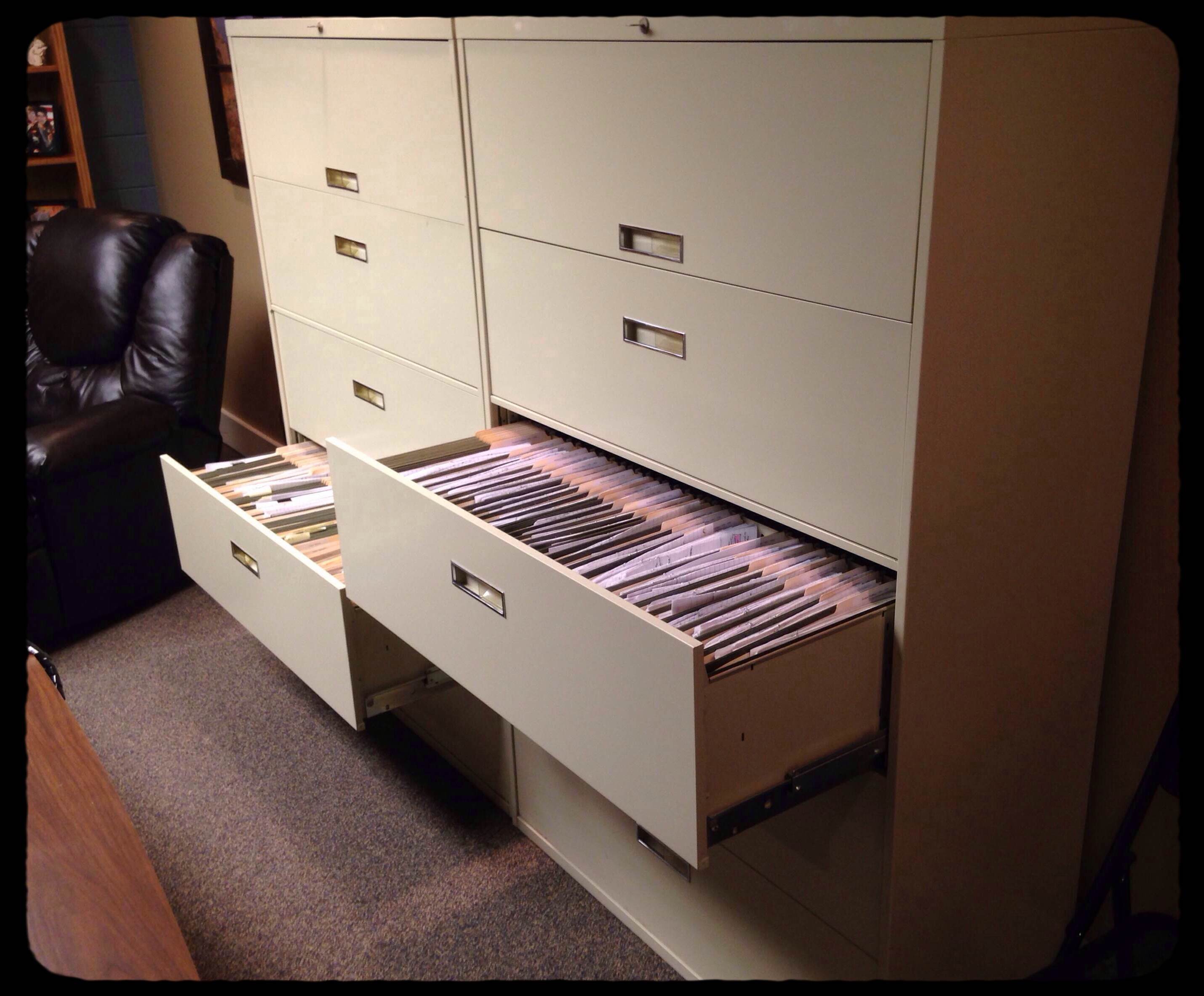
I keep hard copies of all my sermons as well as some of my study notes in these file drawers.

Image

I can look up sermons by title, text, date, occasion, or topic on an Excel spreadsheet on my computer, and then either pull sermons out of the hard copy file, or access pdf files of them on my computer.  I love this capability.

On this tour you’ll notice a few other things, such as the poster on the inside of the door, which is left over from the promotion of a sermon series last year; the fuel station, aka refrigerator and Keurig coffee maker; the Bible stand on my desk (another gift); and of course a place to hang my coat and hat.

I realize that I have something special here, and not every pastor can dedicate an entire room to being a place for study, meditation, and prayer.  In fact, my “Batcave” has only been in use for about two years. Before that I used my regular office (hard because I had to clear my desk for administrative work or appointments), or tried to study at home (lots of distractions), or spent a morning at Panera (which I still do sometimes).   But if it’s possible to have at least some space used solely for study, it can make a preacher of the Word more productive, I think.

Doing what I love
doing what I love 😉